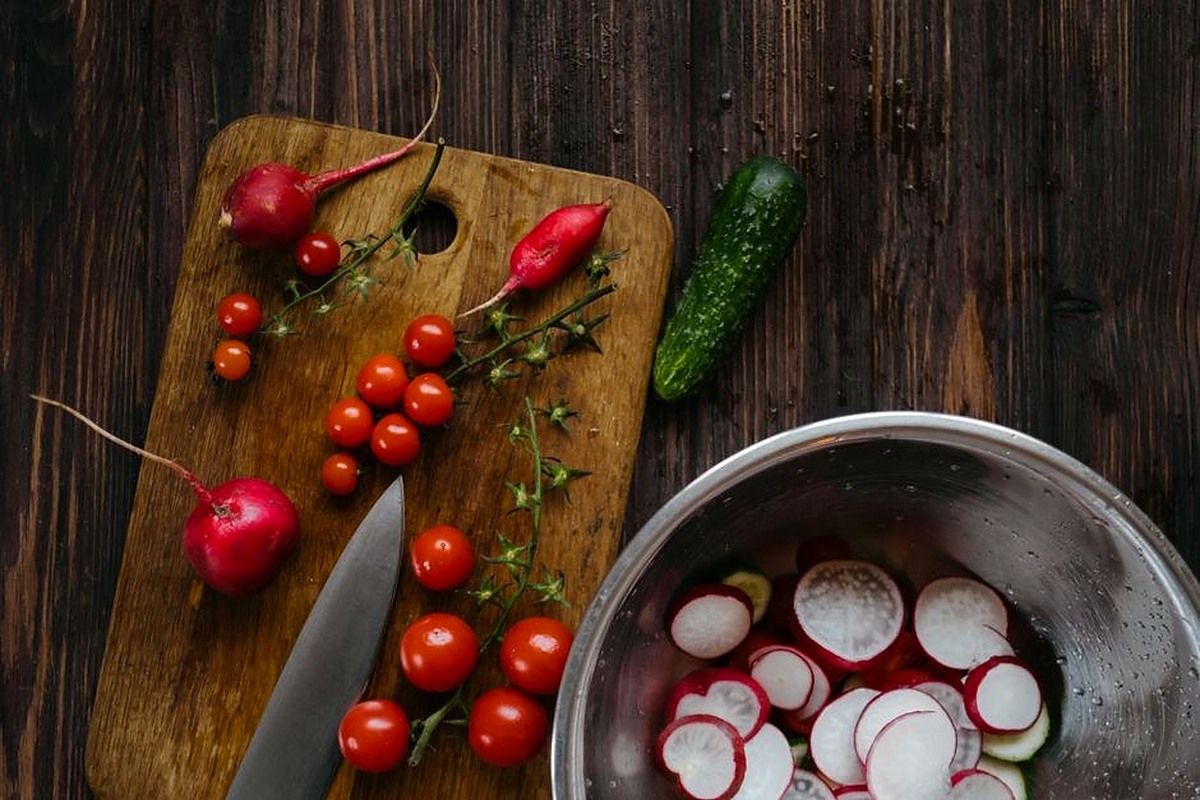
The end-of-week kitchen often contains several good ingredients that do not look like a recipe. There may be half a bunch of radishes, a cucumber, a few tomatoes, herbs that need using, a heel of bread and one dependable thing in the cupboard. That is enough for supper if the vegetables are allowed to lead.
The idea is not to rescue leftovers by hiding them in a complicated dish. It is to give each ingredient one useful treatment and bring them together with contrast: something warm, something raw, something crisp and something sharp.
Choose two vegetables with different jobs
Start with the vegetables that are in the best condition. Let one become the warm element and keep one fresh. Tomatoes can collapse into a pan with olive oil and garlic while cucumber stays cool and crunchy. Radishes can be halved and roasted while their leaves, if fresh, are chopped into a dressing.
Different treatments make a small number of ingredients feel more generous. You are not adding more food; you are adding more texture.
Build the plate around four parts
- A warm base: roasted vegetables, beans, lentils, eggs, potatoes or grains.
- A fresh element: sliced cucumber, tomatoes, herbs, leaves or shaved raw vegetables.
- Something crisp: toasted bread, nuts, seeds or a pan-fried breadcrumb topping.
- A bright finish: lemon, vinegar, yogurt, mustard, herbs or a spoonful of pickles.
You do not need every category to be elaborate. Toast torn into rough pieces and rubbed with garlic can do more for the meal than a second cooked component. A spoonful of yogurt loosened with lemon juice can become the sauce in under a minute.
Cook in layers instead of all at once
Begin with whatever takes longest. Put the potatoes in the oven or the lentils on the stove, then prepare the raw vegetables while they cook. Make the dressing last so the herbs stay lively and the acid tastes fresh.
If one pan can do two jobs, use it. Roast radishes, lift them out, then toast bread in the same oil and seasoning. The browned bits become part of the meal and there is less washing up after dinner.
Season each component lightly on its own. A common mistake with informal suppers is to wait until everything is assembled and then try to fix the entire bowl with salt. Vegetables taste more complete when each part has been given a small amount of attention.
Put the food in the middle
This kind of supper is better served as several shared dishes than as carefully composed plates. Set down the warm vegetables, a bowl of the fresh ones, the crisp element and the dressing. Everyone can build a different combination, and the meal feels abundant even when the ingredient list is short.
Save any dressing that remains. Tomorrow it can go over eggs, into a sandwich or onto the last handful of leaves. The useful lesson of a vegetable-first supper is not a formula you must follow forever. It is the habit of looking at what is already present and asking what contrast would make it feel like dinner.