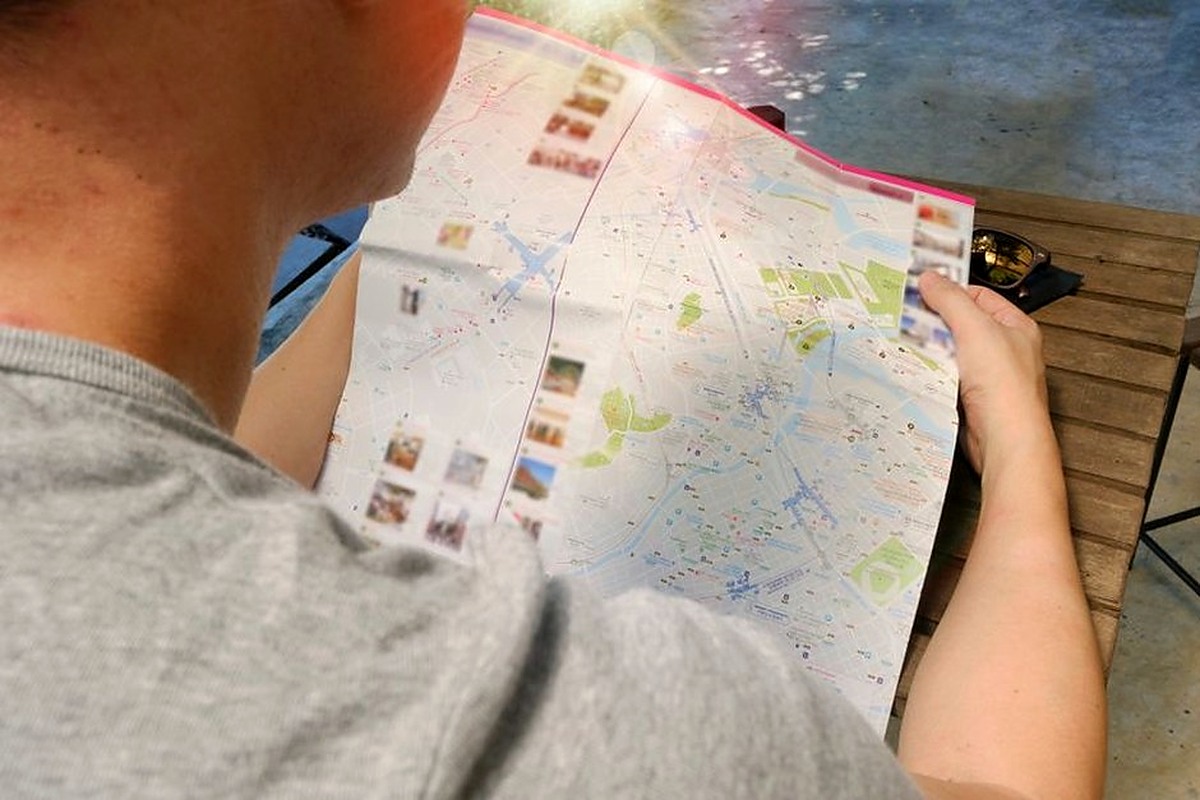
A day trip is small enough to feel spontaneous and long enough to benefit from a little structure. The easiest version begins before the train leaves or the car door closes: spread out a paper map, choose one part of it, and decide what would make the day feel complete even if nothing else goes to plan.
Maps are useful here because they show relationships rather than instructions. A screen is excellent at telling you where to turn. A sheet of paper is better at showing that the river bends toward a village, that a hill path reaches the same road as the bus, or that two places you had treated as separate are actually close enough to connect on foot.
Start with one reason to go
Pick a single anchor: a coastal path, a small museum, a market, a garden, a viewpoint, or simply lunch somewhere you have wanted to try. One anchor is enough. When a day trip begins with four “must-see” stops, travel between them becomes the main activity and the place itself is reduced to a sequence of arrival times.
Mark the anchor on the map, then look at what sits within a comfortable walking radius. A square, a footpath, an old bridge, a patch of woodland or a street that follows the water may give the day its second half without needing a second reservation.
Read the map at walking speed
Distance looks different when you imagine moving through it on foot. A kilometer through a historic center can take an hour if there are shop windows, courtyards and coffee along the way. The same distance beside a fast road may feel longer and offer almost nothing worth stopping for.
Look for routes that change character. A good short walk might move from station to high street, from high street to a riverside path, and from the path to a quieter residential edge before looping back. Those transitions make a modest area feel larger because the scenery keeps resetting.
The most useful plan is not a list of places. It is a shape for the day that still leaves room to change your mind.
Give lunch a window, not a minute
It helps to know roughly where you want to be around midday, but an exact lunch time can make the morning feel like a countdown. Instead, identify two or three possible places within the same area and allow a broad window. If one is busy, another is closed, or the walk takes longer than expected, the day does not collapse.
This is also where a paper map is reassuring. You can circle the alternatives and see immediately whether they fit the route rather than reopening a search every time plans shift.
Keep the return simple
Before leaving, identify the reliable way home: the station with the most frequent service, the bus stop with an evening schedule, or the road you know will remain straightforward after dark. That small piece of certainty buys freedom earlier in the day.
If the weather changes, you can shorten the loop. If a village is more interesting than expected, you can stay. If the final café has a sunny table, you can order another drink without wondering whether you have accidentally stranded yourself.
The map may come back folded differently, marked with a coffee ring and carrying a few new pencil notes. That is part of the appeal. A good day trip does not need to prove how much ground you covered. It only needs to leave you with a clearer sense of one small piece of the world.